






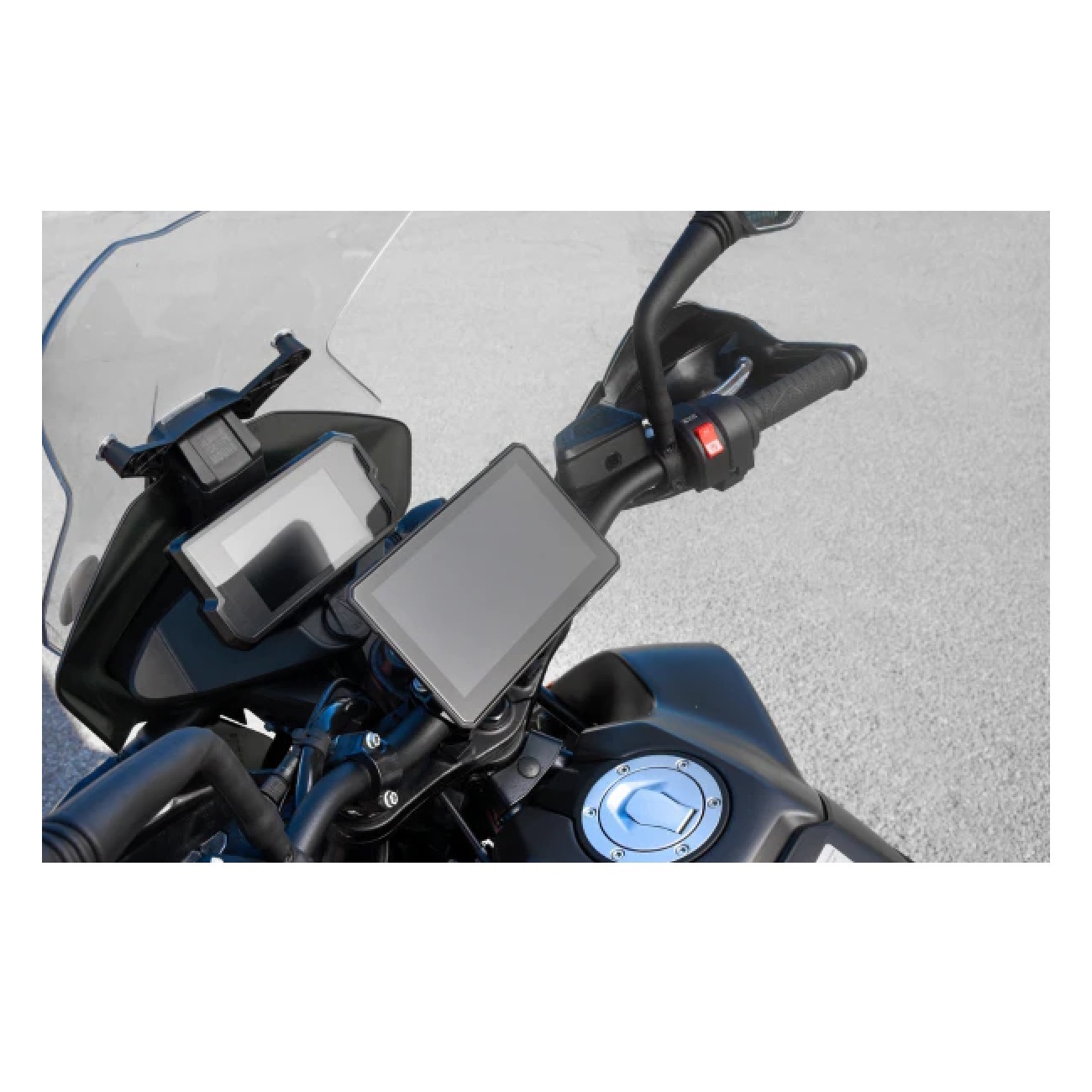
INTERPHONE SYNC70

Used technologies in this product


Product number:
689302-00/001-0-Stck
Product information "INTERPHONE SYNC70"
Hauptmerkmale
- BSD Toter-Winkel-Erkennung: Warnt den Fahrer mit visueller roter Anzeige auf dem Bildschirm vor Fahrzeugen im toten Winkel des Motorrads (nutzt die Rückfahrkamera).
- DCR Duale Kameraaufzeichnung: Hochwertige Front- und Heckkameras, die nonstop Aufzeichnung von allem, was um Ihr Motorrad herum passiert.
- Geteilter Bildschirm: Der Bildschirm wird geteilt, um das Bild der Rückfahrkamera mit anderen Funktionen (GPS-Signalstatus, Musik, Gesamtkilometerzähler usw.) gleichzeitig anzuzeigen.
- TPMS Reifendruck-Überwachungssystem: Echtzeitanzeige und Alarm zur Sicherstellung für einen optimalen Reifendruck, für besseres Handling und Sicherheit.
- GPS-Bildschirm: Genießen Sie einen zusätzlichen Bildschirm auf dem Armaturenbrett, mit Geschwindigkeit, GPS-Signalstatus, Gesamtkilometerzähler und Reifendruckanzeige mit Warnung vor anomalen Druck
Technische Merkmale
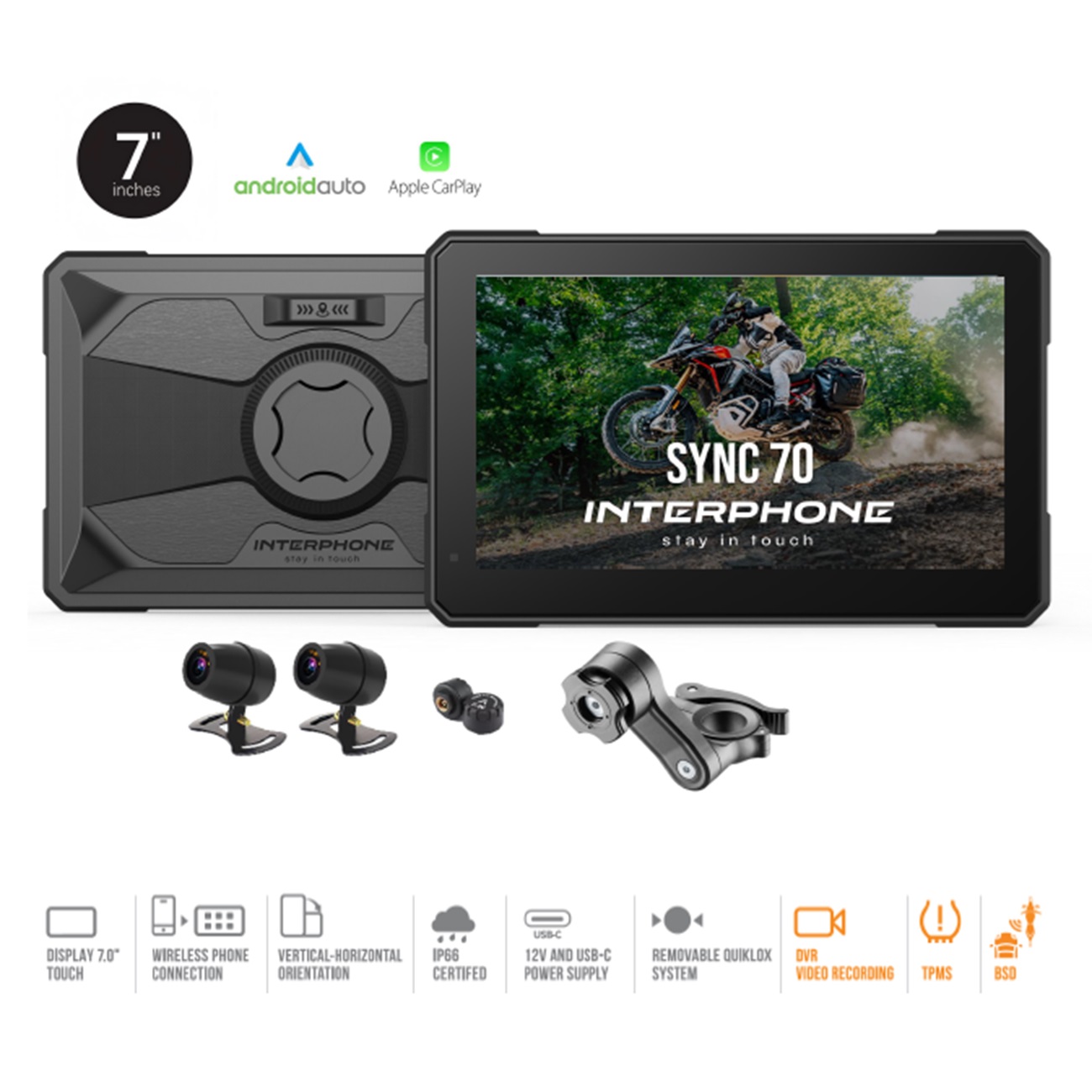
- 7“ IPS kapazitiver Touchscreen
- Bluetooth + Wi-Fi 2,4/5 GHz mit Apple CarPlay und Android Auto
- IP 66 wasserdicht
- 12V DC / USB-Stromversorgung (USB Typ C und A)
- Quiklox-Montagesystem
- Eingebautes GPS-Modul für Geschwindigkeit und Gesamtkilometerzähler
- Front- und Rückkameras mit 1080P-Auflösung
- Kabellose Reifendrucksensoren, Knopfbatterie im Lieferumfang enthalten
- Betriebstemperatur: -20°C bis + 70°C
- Loop Aufnahme für SD-Karte: U3-Klasse, Unterstützung von 32 GB - 256 GB ( nicht im Lieferumfang enthalten )
- Abmessung: 184,2 x 117 x 31,2 mm
- Gewicht: 419,5g
- Bluetooth® v. 4.2 - Class 2
Inhalt der Verpackung
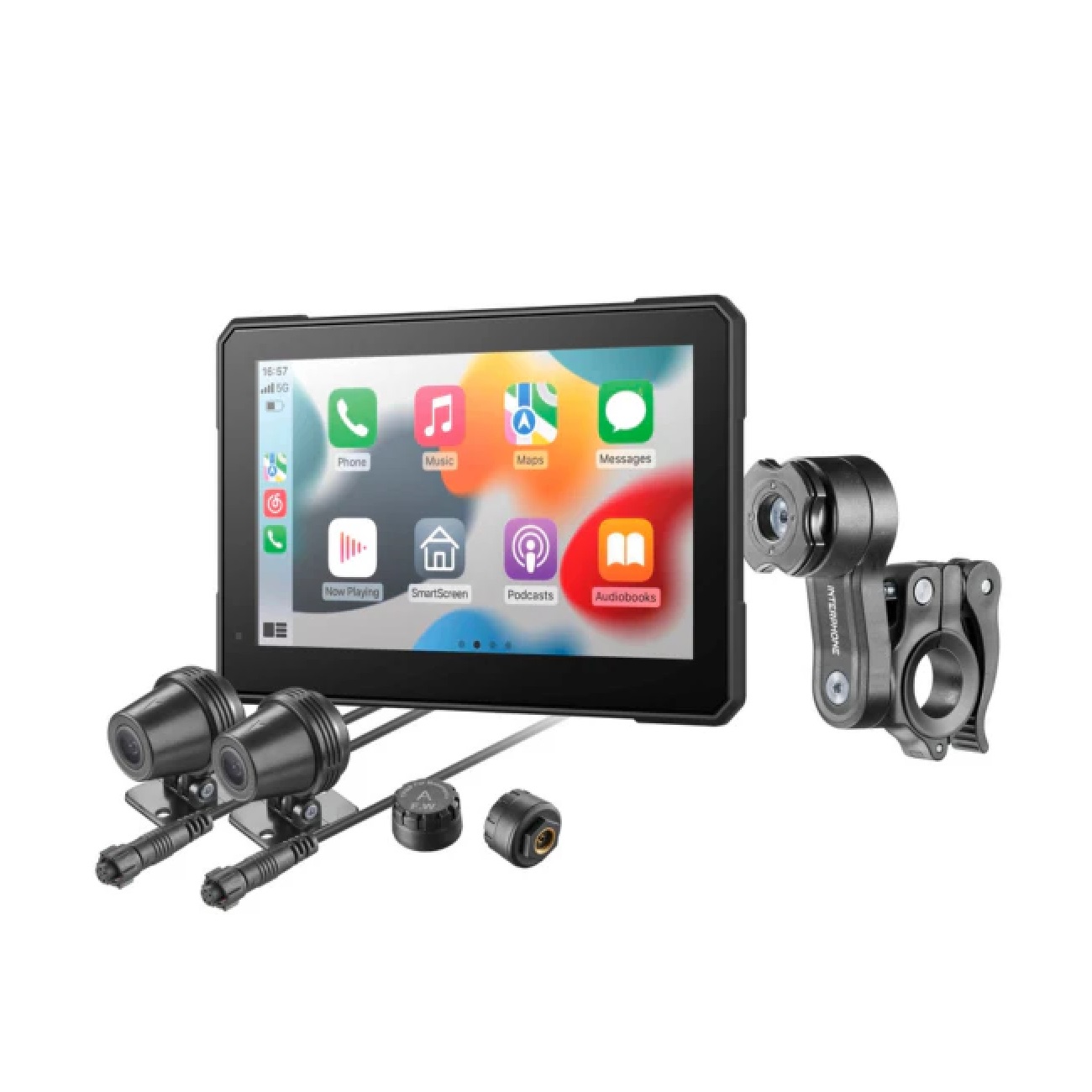
- SYNC70-Gerät
- Quiklox-Montagesystem incl. Abstandshalter 12-22-24,5-28 mm
- Front- und Rückkameras
- Hauptverbindungskabel
- 12V-Stromquellenadapter und Kabel
- USB-A Stromversorgungskabel
- USB-C Stromversorgungskabel
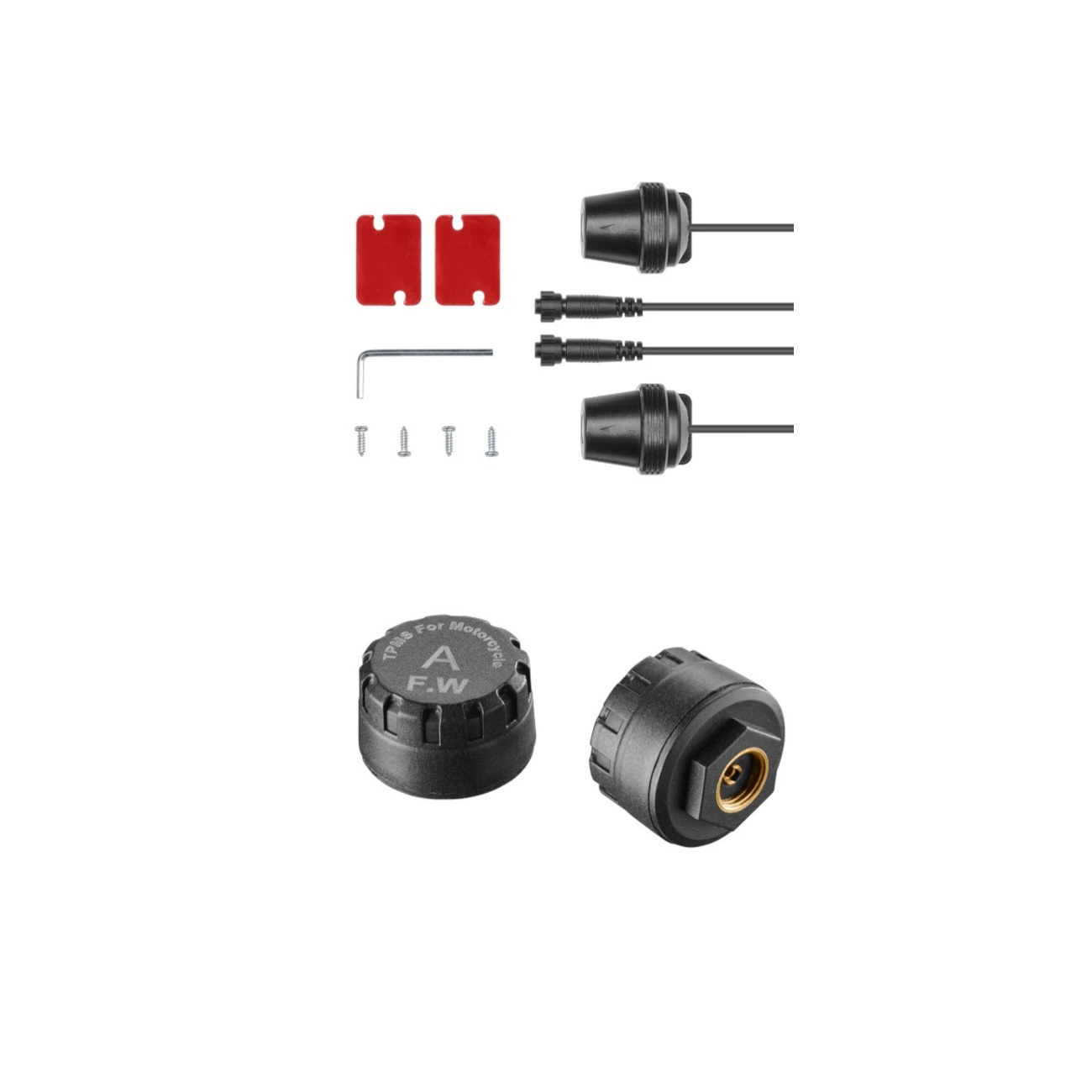
- Vordere und hintere TPMS-Draht-Sensoren
- Benutzerhandbuch
WEEE-Reg. Nr. DE64088074
Manufacturer Cardo
Cardo Certification Company B.V. #2024-001 (EU)
Veluwezoom 42
1327 AH, Almere
The Netherlands
info@certification-company.com
+31 36 202 4012
Note on disposal
Note on the disposal of waste electrical and electronic equipment (WEEE)
In connection with the sale of waste electrical and electronic equipment, we are obliged as a retailer under the German Electrical and Electronic Equipment Act to inform our customers of the following:
- You are required by law to separate waste electrical and electronic equipment from other waste before disposal. There is an obligation to separate spent rechargeable and non-rechargeable batteries that are not hardwired into WEEE before handing them in.
- As an end consumer, you may return waste electrical and electronic equipment from our product range free of charge in our dispatch warehouse or send them back to us. Alternatively, there are return options in your area, the addresses of which can be obtained from the local council. Please note that you may not dispose of old electrical and electronic equipment in household waste. This is indicated by the crossed-out dustbin icon.
- If personal data is present on the old equipment to be disposed of, you are solely responsible as the end user for deleting the data from the old equipment before disposal.
- WEEE Elektroschrott-Reg. Nr: Held
DE82399275
6. Notes according to the German Battery Act
In connection with the sale of rechargeable and non-rechargeable batteries, we are obliged as a distributor under the German Battery Act to inform our customers of the following:
- You are legally obliged to return old rechargeable and non-rechargeable batteries after use. As an end user, you can also return old rechargeable and non-rechargeable batteries from our product range free of charge in our dispatch warehouse or send them back to us. You can also return the old rechargeable and non-rechargeable batteries at a municipal collection point or in local shops. Please note that rechargeable and non-rechargeable batteries must not be disposed of in household waste. This is indicated by the crossed-out dustbin icon on the rechargeable and non-rechargeable batteries.
- This is because improper disposal of rechargeable and non-rechargeable batteries may have harmful effects on the environment and human health due to the substances contained in the batteries. For this reason, the separate collection and recycling of spent batteries is particularly important to protect the environment and health.
- Rechargeable and non-rechargeable batteries are also marked with the chemical symbol of the particular pollutant they contain. Batteries containing more than 0.0005 mass percent of mercury, more than 0.002 mass percent of cadmium or more than 0.004 mass percent of lead are marked with the chemical symbols of the metals (e.g. "Cd" for cadmium, "Pb" for lead, "Hg" for mercury).
- BattG Batterieschrott-Reg.Nr: Held DE93039949
Smart Display Übersicht
Link: Smart Display Übersicht
ENG legal guarantee